Even if your organization is on course, it's wise to look for ways to inoculate yourself against drift. You'll discover what you can do to prevent drift or get back on track and how to protect what matters most.
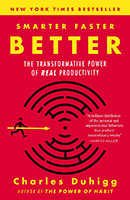
A groundbreaking exploration of the science of productivity, one that can help anyone learn to succeed with less stress and struggle, and to get more done without sacrificing what we care about most.
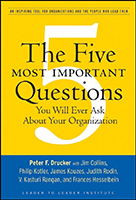
These essential questions, grounded in Peter Drucker's theories of management, will take readers on a exploration of organizational and personal self-discovery, giving them a means to assess how to be--how to develop quality, character, mind-set, values and courage.
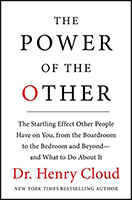
Using evidence from neuroscience and his work with leaders, Dr. Henry Cloud shows that the best performers draw on another vital resource: personal and professional relationships that fuel growth and help them surpass current limits.
Brown explains how vulnerability is both the core of difficult emotions like fear, grief, and disappointment, and the birthplace of love, belonging, joy, empathy, innovation, and creativity.
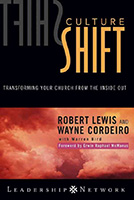
Culture Shift helps you identify your church’s distinctive culture, gives you practical tools to change it, and provides steps to keep it aligned with your church’s mission.
To do well in life, we must first think well. Thinking for a Change is a unique primer not on what to think, but how to best use one of your most precious possessions: your mind.
Thom S. Rainer shares an eight-stage roadmap to leading change in your church by changing methodologies and approaches for reaching a rapidly changing culture.
Without our realizing it, other people’s behavior has a huge influence on everything we do at every moment of our lives, from the mundane to the momentous occasion. Even strangers have a startling impact on our judgments and decisions.
The authors reveal nine specific points of tension commonly arising from clashing value systems among generations and prescribe nine proven solutions to resolve conflict and build communication, nurture collaborative teams, and create long-lasting relationships among colleagues of every age.
We need a different style of leadership—one patterned after Jesus. Jesus influenced others because of who he was, not because he was well-known or a person of power or because he had mastered a set of skills or implemented an effective leadership strategy.